Firebreaks & fuel-load clearance — Chilterns & Buckinghamshire
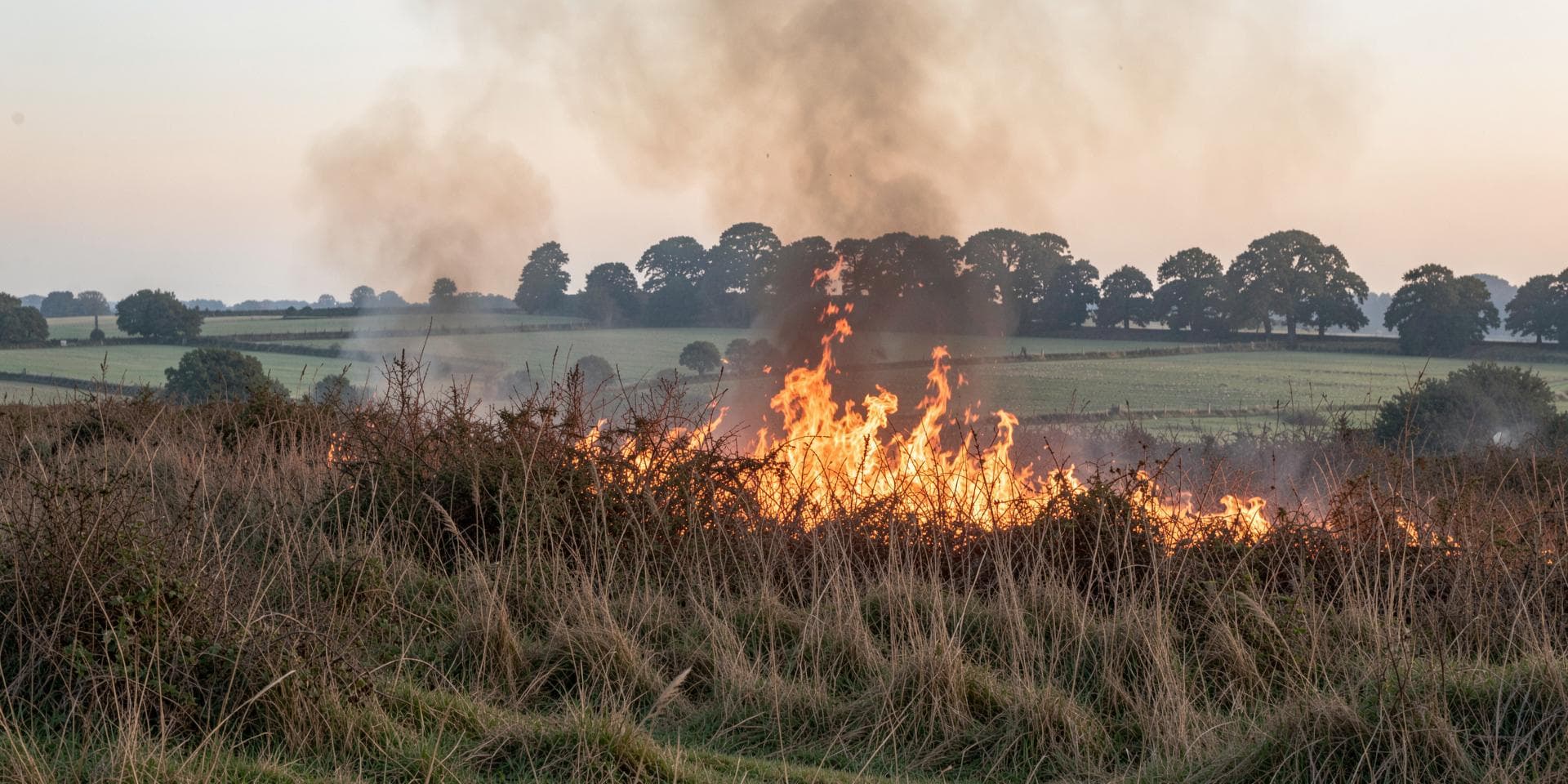
Wildfire reached the Chilterns this summer.
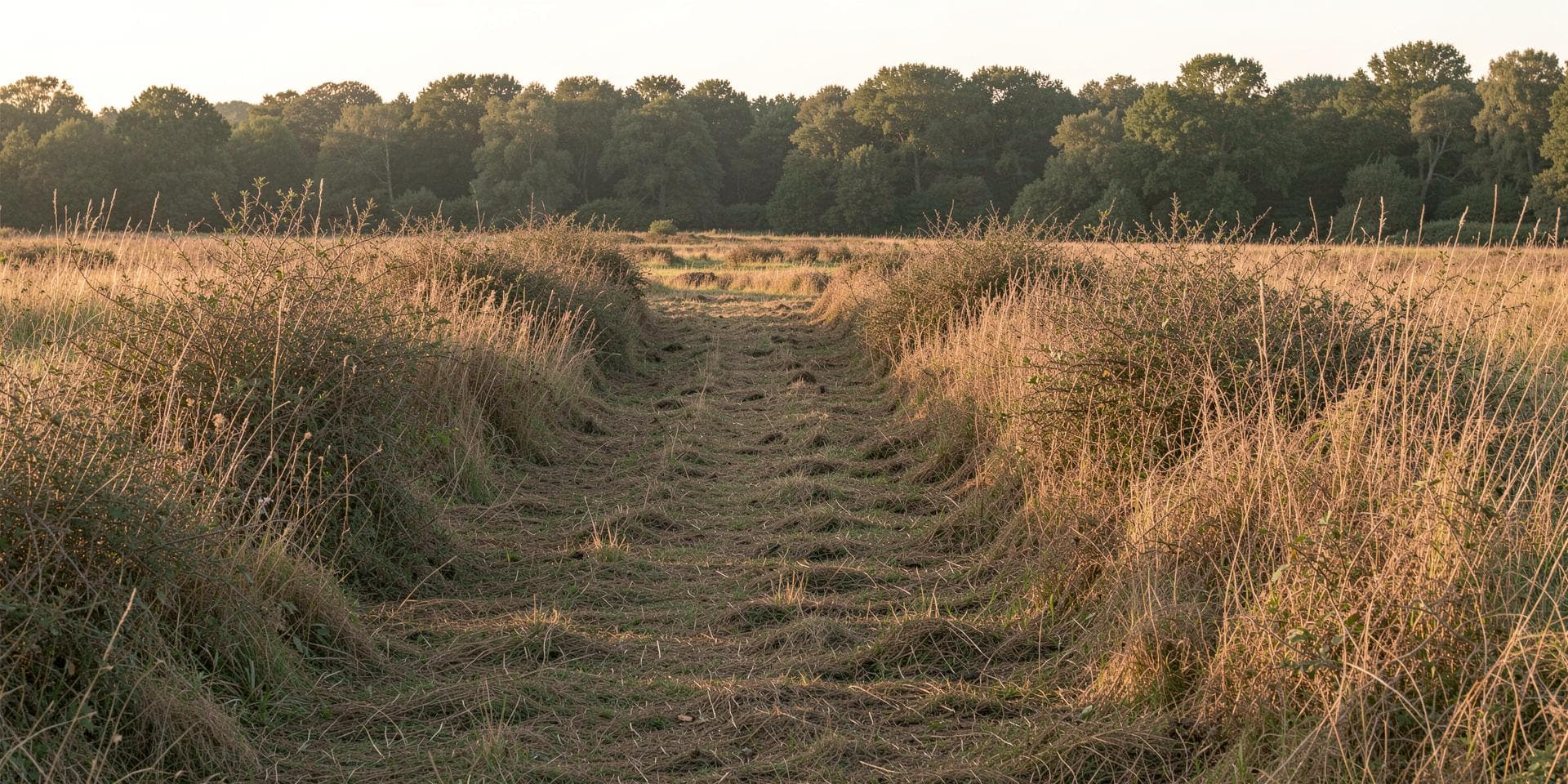
The firebreak channel we cut — where fire runs out of fuel.
Preventing the next one is being left to the local level.
Chiltern Firebreak clears fire-specific brush and cuts defensible lines around the things that would be hard to replace — village halls, allotments, barns, homes on the edge of open ground. We run machinery built for tall, dense growth that ordinary cutters leave standing.
Service record
- Service
- Firebreaks, fuel-load clearance and defensible-space cutting
- Area covered
- Chilterns & Buckinghamshire
- Works for
- Parish & town councils, village halls, allotment sites, farms & estates, homes bordering open ground, land and estate managers
- Availability
- All year round — not a summer-only service
- First visit
- Free site walk, no obligation
- On site
- The service works to a fire-safety method every job
- Telephone
- 07770 756 436
Not a fire job?We also clear ground that has simply got away — paddocks, scrub, brambles, saplings. Clearing overgrown ground.
What the service does
Chiltern Firebreak doesn’t replace your grounds contractor, who currently maintains your open spaces.
That’s a different job from making the ground hard for fire to cross — different targets, different timing, different machinery. It usually isn’t in anyone’s contract, so it doesn’t get done. That gap is the whole of what this service does.
- Fuel-load clearance
- We take out the standing dead growth, bramble and woody scrub that carries fire across ground. Tidiness isn't the aim — removing the material that lets fire travel is.
- Defensible lines
- We cut a cleared break between open ground and the thing you'd hate to lose. Wide enough to slow a fire down, and to give a crew somewhere to stand and work.
- Heavy brush ordinary cutters leave
- Tall, dense, woody growth that stops a ride-on or a strimmer team. Our forestry-spec flail heads go through material ordinary equipment has to work around.
Why it matters
Three things are true at once this summer, and together they make a gap somebody has to stand in.
- The cutting has stopped
- Buckinghamshire Highways paused its grass-cutting programme in late July. What is standing is cured and dry, and nothing is scheduled to take it away.
- It has already happened here
- Vegetation fires around Aylesbury this summer have each taken several crews to hold. Not a distant, hotter-country problem — the same fields, the same season, the same conditions still in place.
- It falls to whoever owns the ground
- Fire and rescue come when it is burning. There is no service that comes beforehand and takes the fuel away — so it sits with whoever owns the land. The parish, the estate, the farm.
That is the gap this service fills. It is a local decision, on local ground, and it has to be made before the next hot week rather than during it.
What a break actually does
The machinery
We choose the machine to match the job — the ground ordinary cutters can’t cope with.
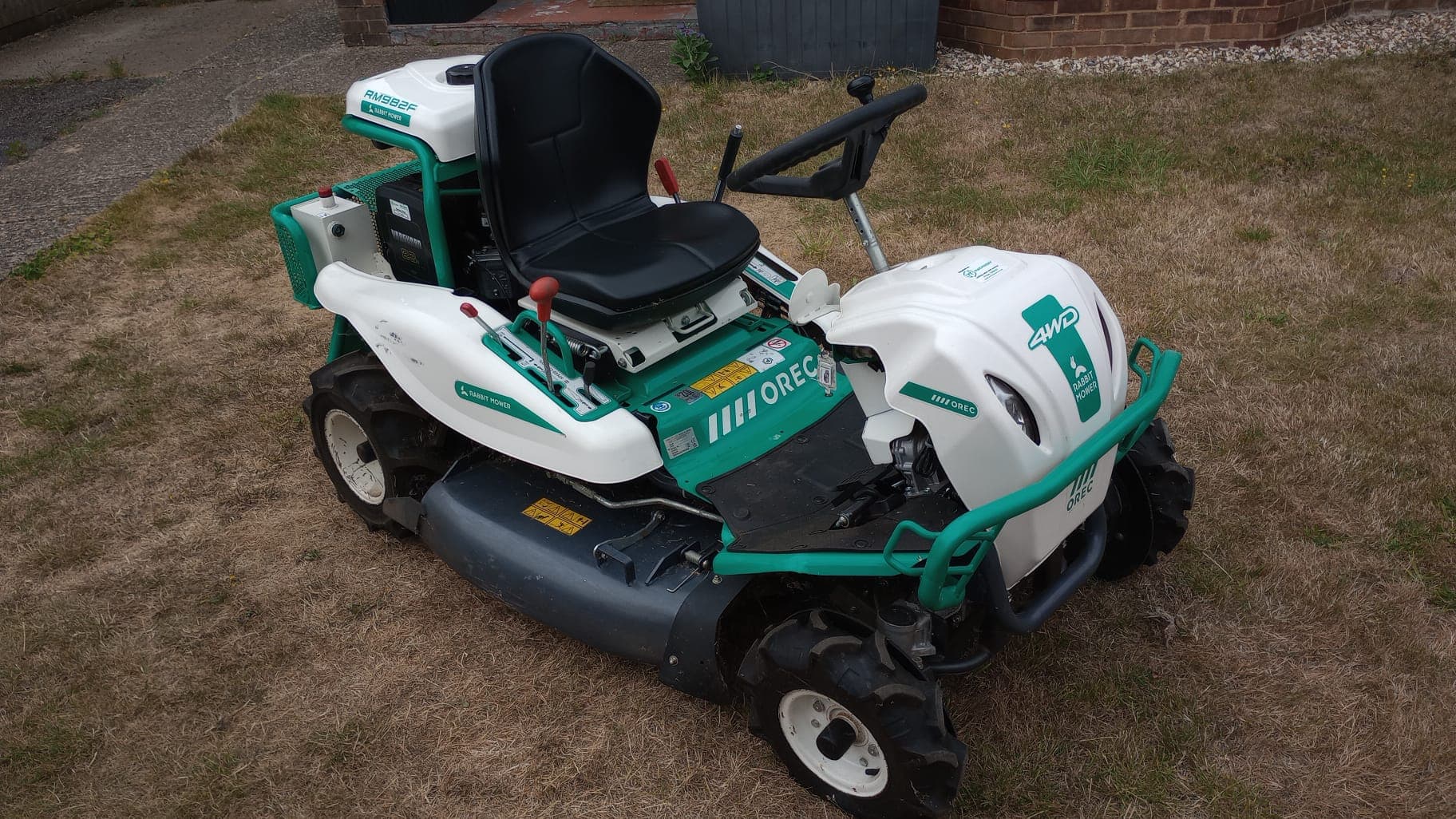
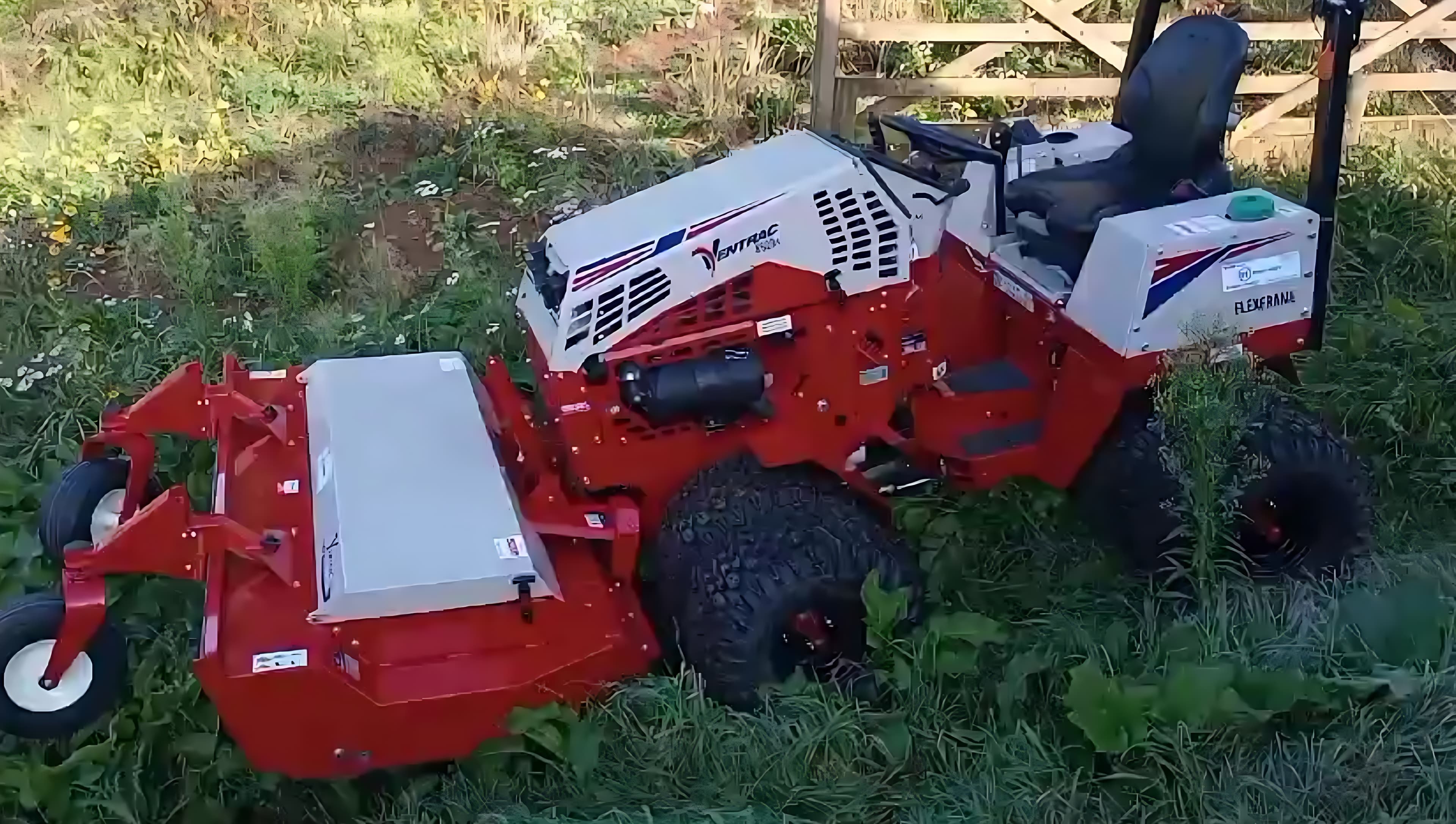
These are the machines we have available. Which one comes out is decided by the ground, not by what happens to be on the yard that week.
Purpose-built for the growth, not adapted to it
Specialist fuel-load and flail kit made for tall, dense, woody brush. Not a mower with a heavier blade — heads designed to take standing growth down to a defensible state, on ground ordinary cutters have to work around.
It scales to the job
Machinery is available for work of any scale, so the size of the ground doesn't decide whether the job gets done. A parish green and a farm boundary are the same problem at different sizes, and both are workable.
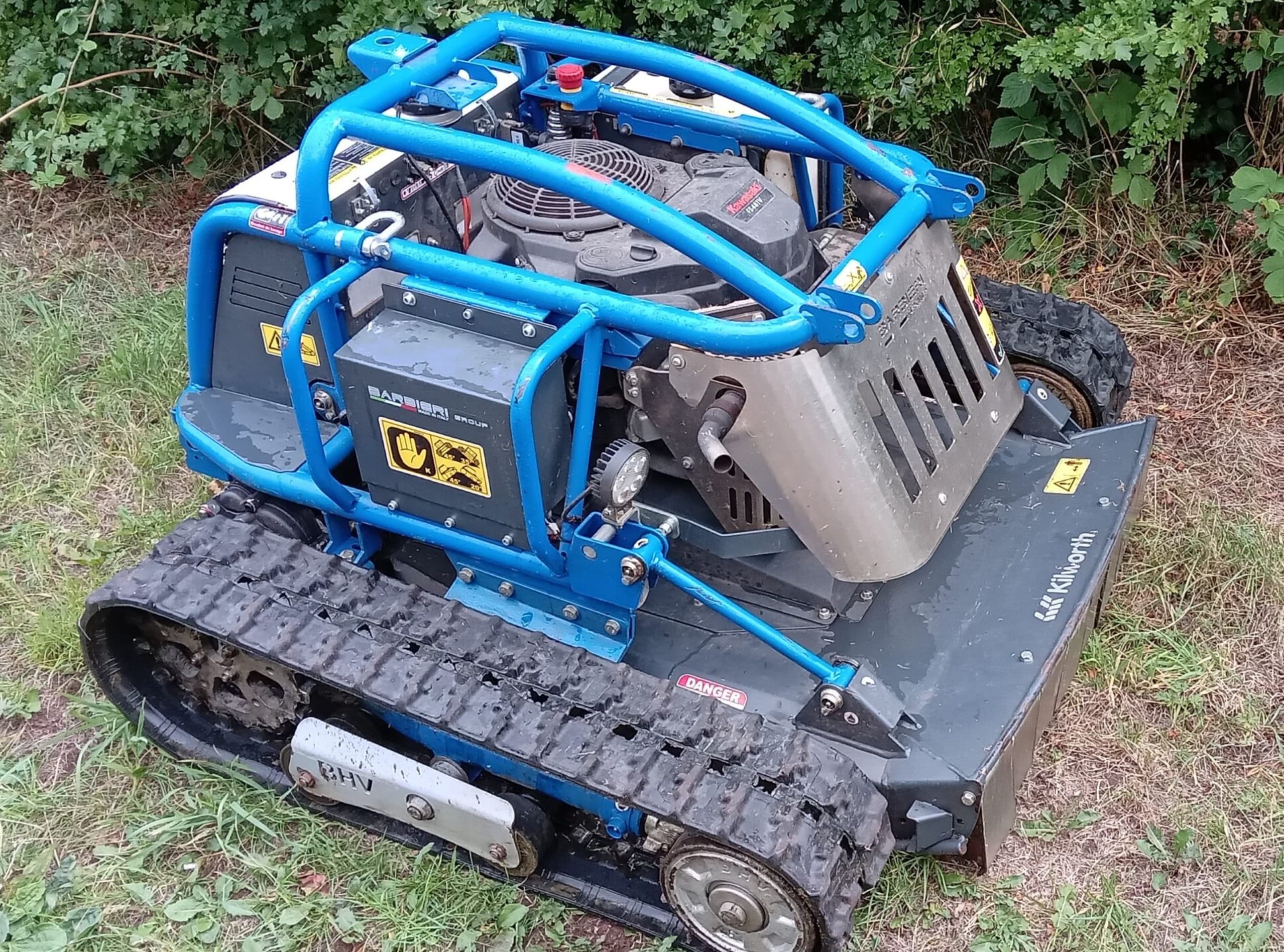
The right machine for the conditions
The biggest machine is rarely the right one. Slope, ground condition, access and what's actually growing decide what we bring. Too much machine on soft or steep ground makes a second problem out of the first, so the match matters more than the horsepower.
How we work safely
It’s a fair question to ask anyone bringing machinery onto dry ground: what stops us starting one?
We cut all year round. These precautions matter most in a dry summer, but they run on every job, in the order they happen on site. I’ll walk you through it in person before any work is agreed, and you’re welcome to watch it being done.
Spark arrestor fitted and checked
The machine goes onto dry ground, so the machine must not be an ignition source. Arrestor checked before the day starts, not assumed from the last one.
Suppression on hand for two different fires
A brush fire and a fire on the machine are separate problems needing separate kit. We carry for both, within reach of the cab rather than back at the vehicle.
Fuel lines and hot surfaces checked
Fuel weeping onto a hot exhaust is one of the commonest ways working machinery starts a fire. Checked before we start and again through the day, not just at service intervals.
Conditions assessed on arrival, and a stop rule
Wind and dryness are read on the day, on the ground. If the day is wrong for cutting, we say so and move it. A break that starts the fire it was meant to stop is worse than no break.
Cut material left in a defensible state
Arisings dealt with rather than heaped against the building we just spent the day protecting. A tidy-looking site with a fuel pile at the gable end has not been made safer.
None of this is difficult. It is just rarely written down, and never shown to the customer — which is why it’s on the front page rather than in a folder in the van.
Contact
I’ll walk any site with you, free.
- I come out and look at the ground with you.
- I tell you what I'd clear, what I'd leave, and why.
- You get a price. If there's nothing worth doing, I'll say that instead.
Funding
There may be routes worth checking — parish devolved budgets, or Forestry Commission schemes. We’ll tell you what we know about them and where to look. We can’t get you funding and won’t pretend otherwise.